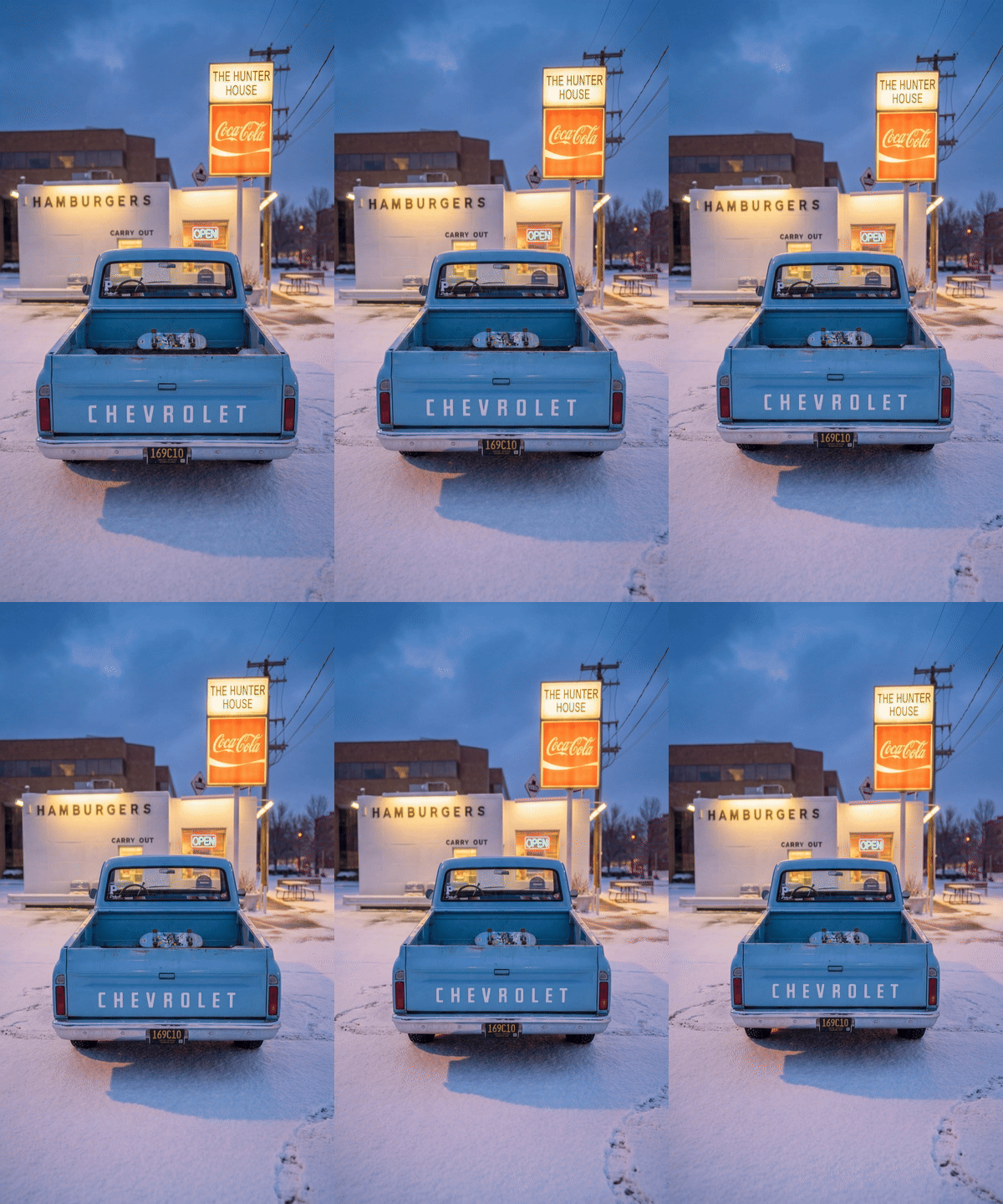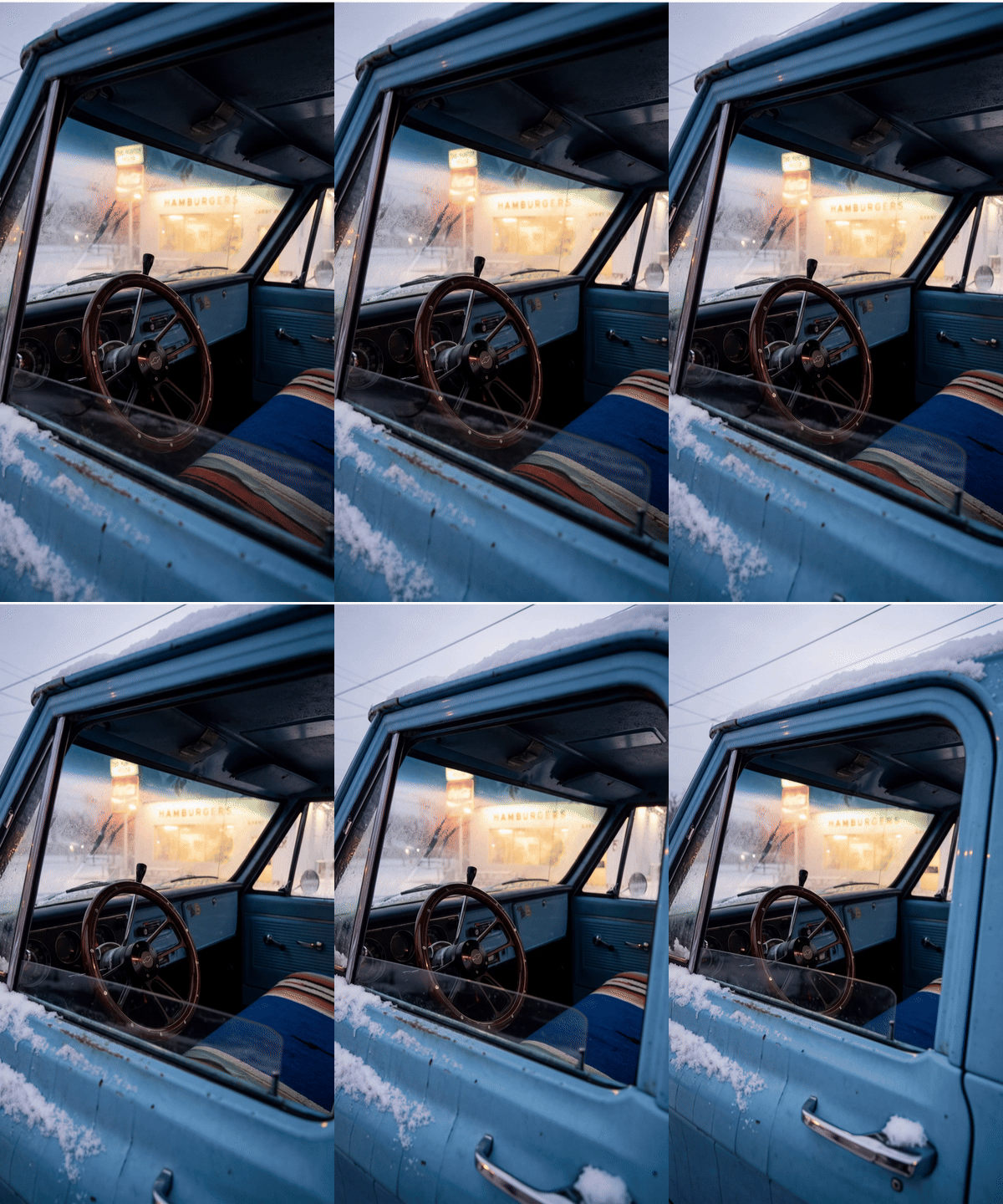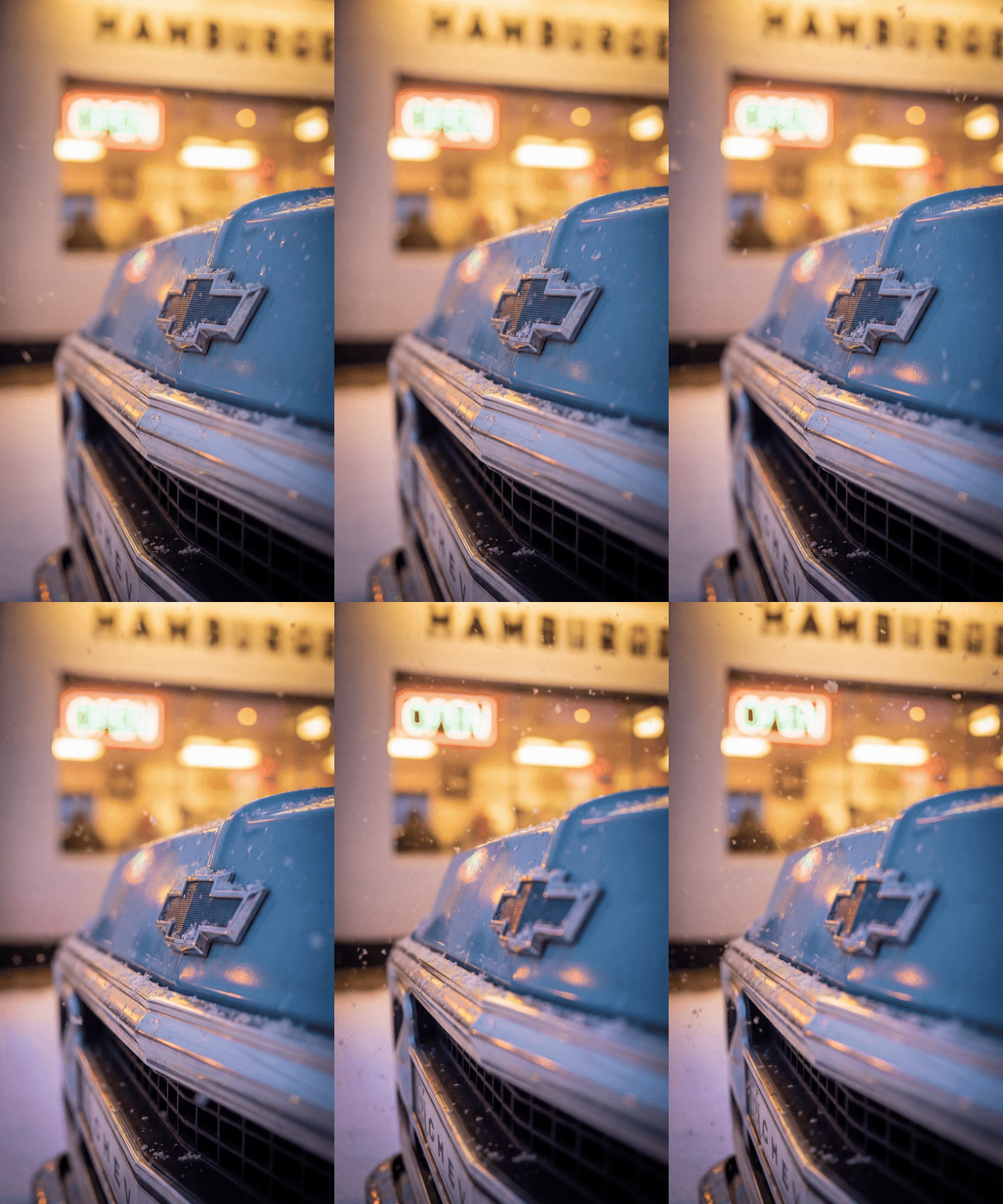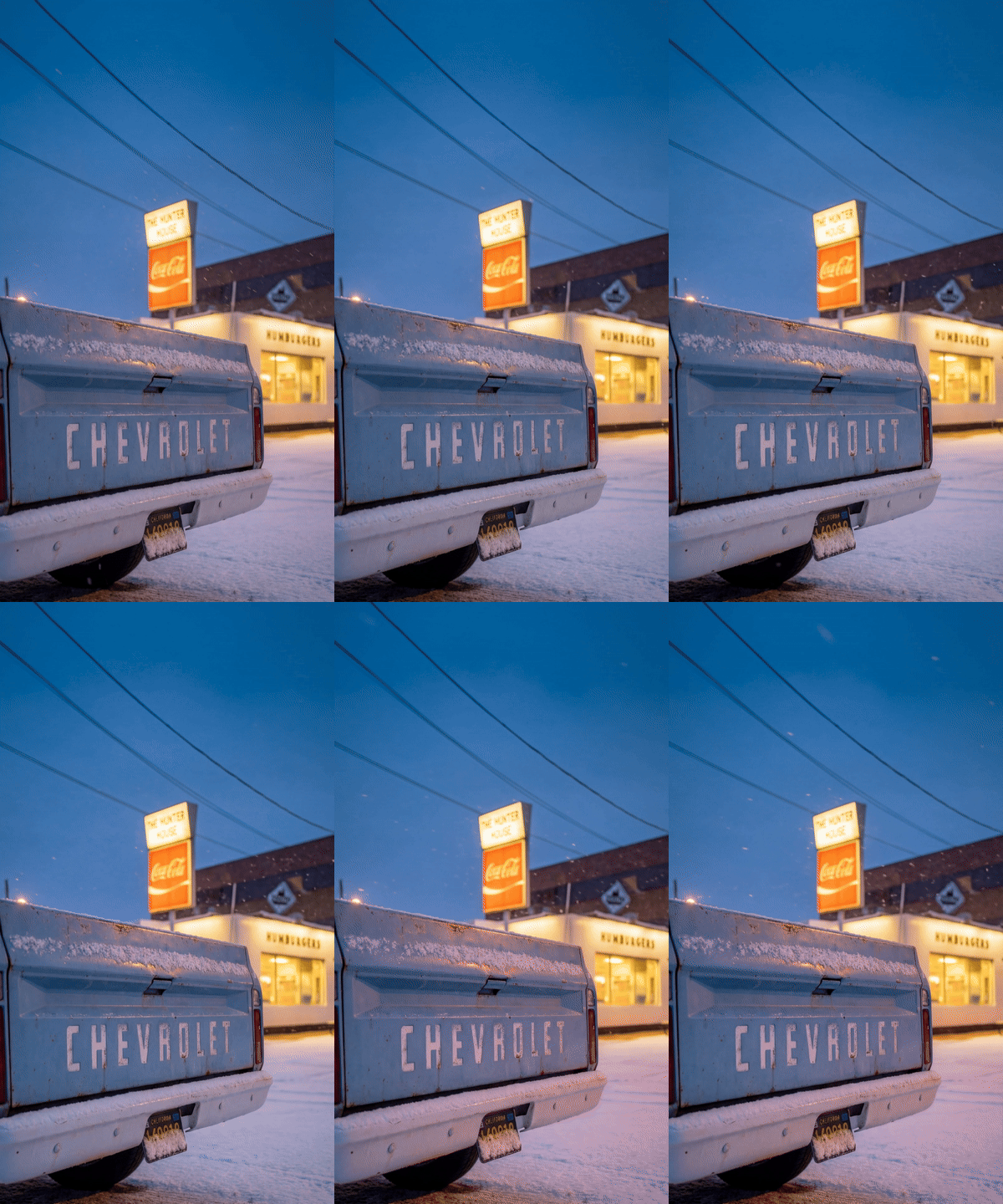
The key to reality is craft.
Reality doesn’t come from the tool.
It comes from respect for the subject, discipline in the process,
and restraint in execution.
Wildnode isn’t about generating more images.
It’s about protecting what’s real while unlocking scale.
philosophy in practice:
1. Start with truth:
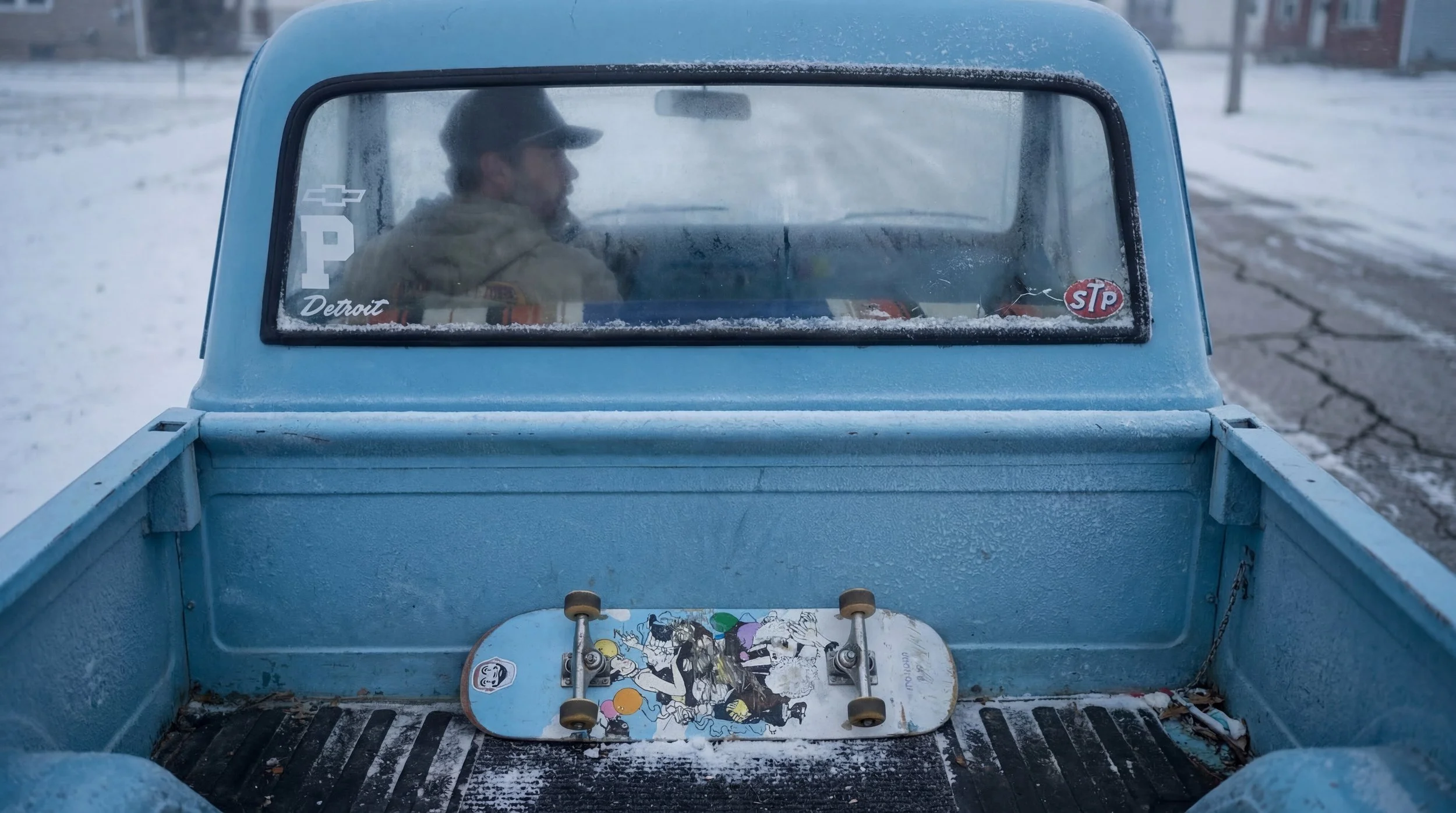
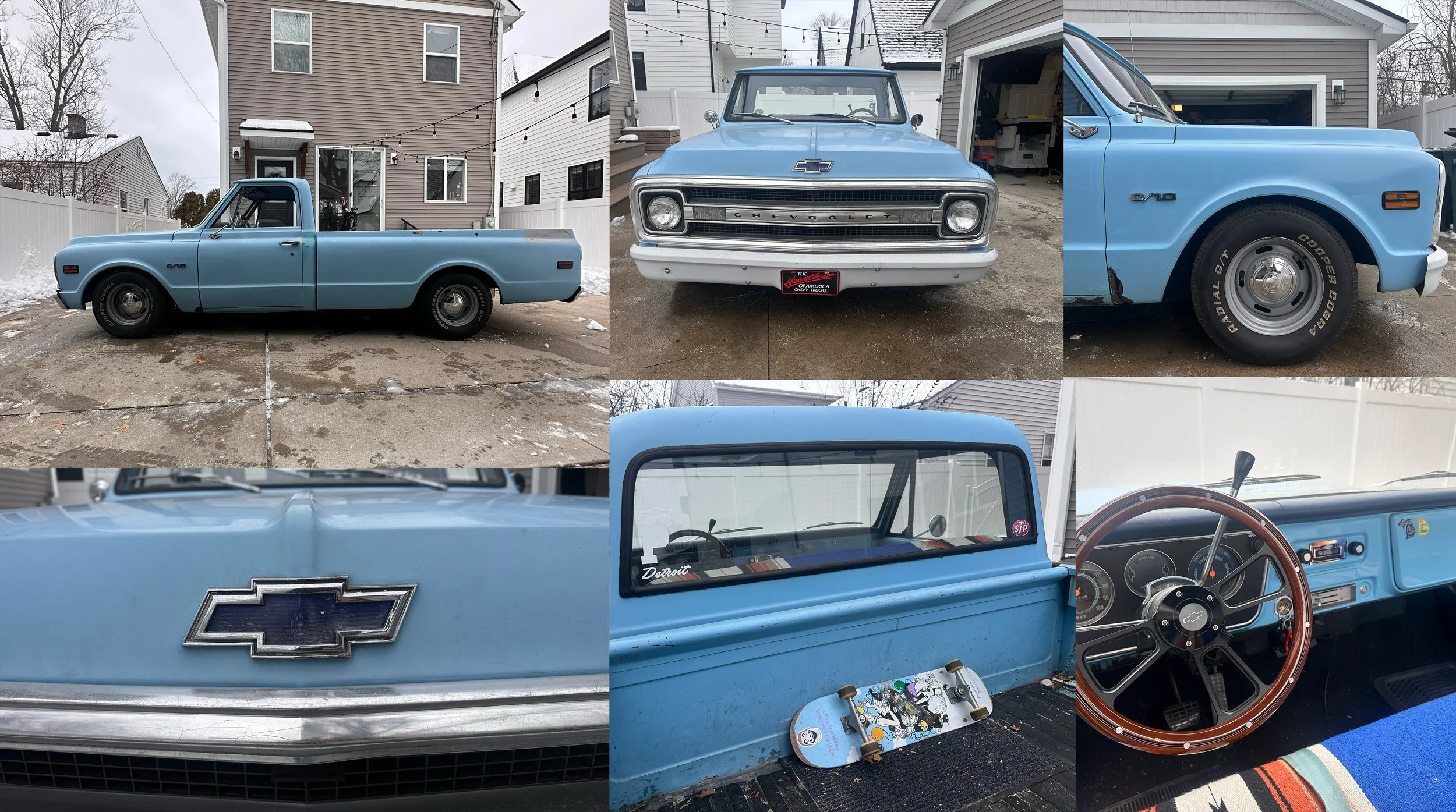
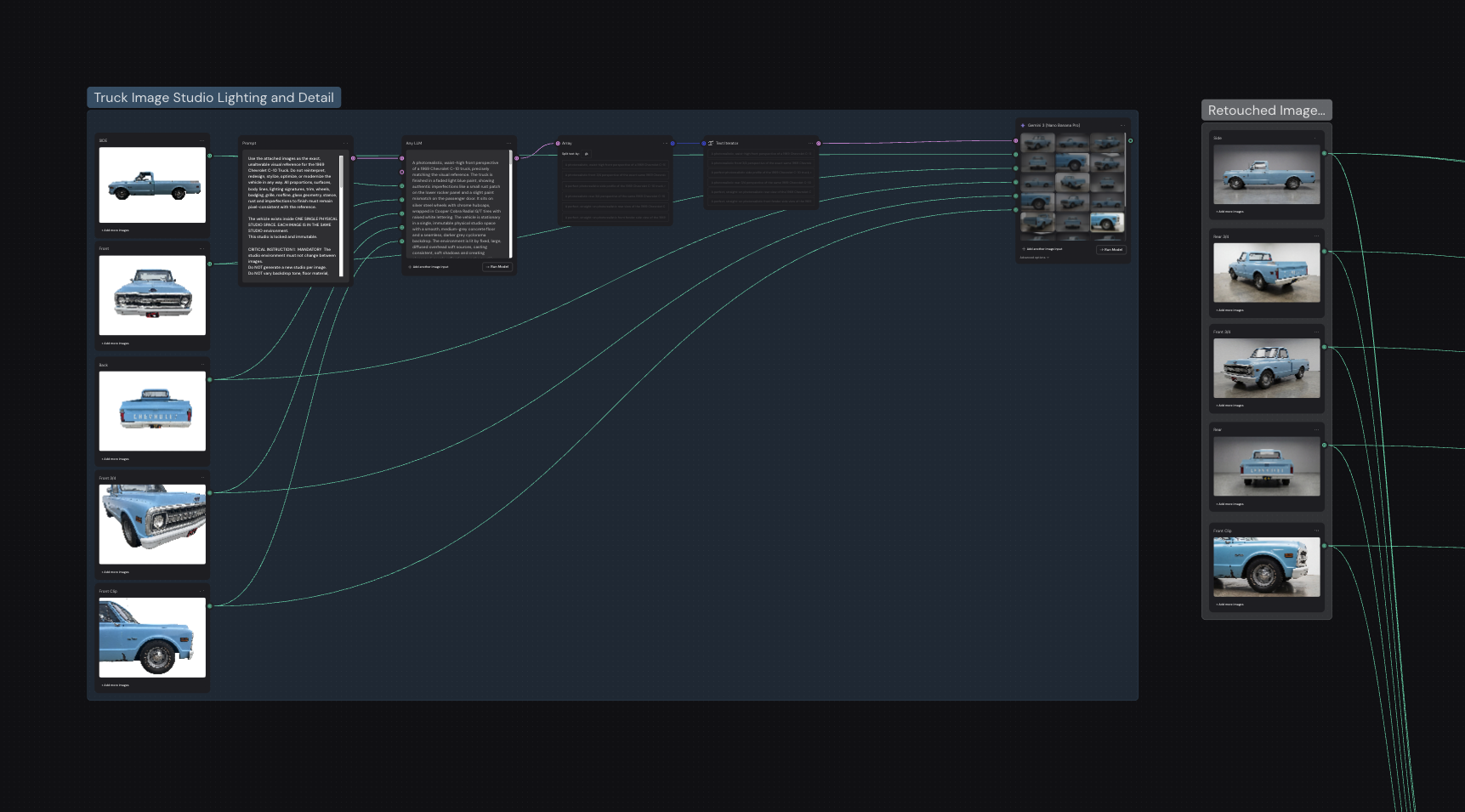
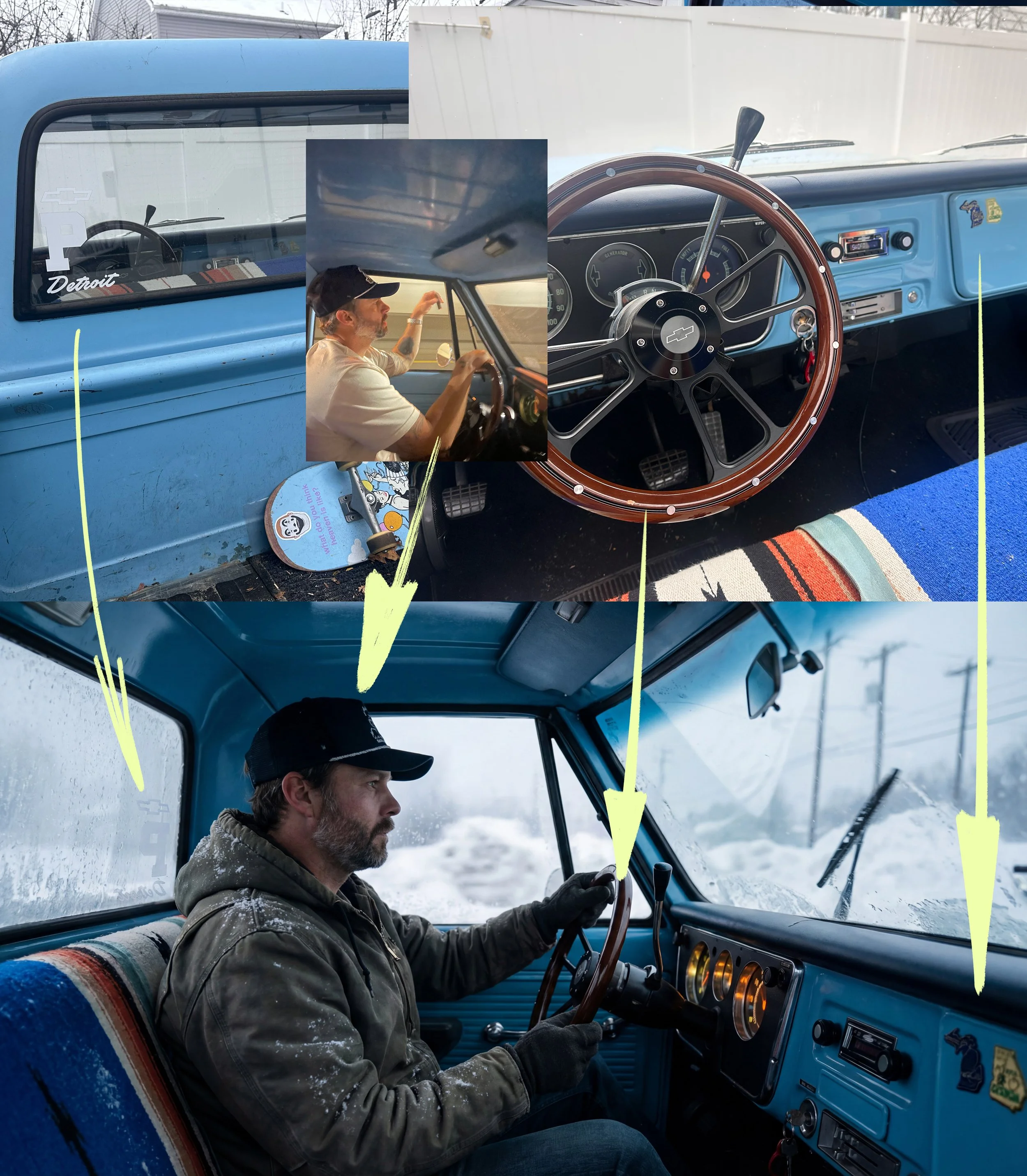
Everything begins with real photography of my actual 1969 Chevrolet C-10.
Every dent, paint chip, stance adjustment, and material imperfection is treated as non-negotiable source truth.
AI is not allowed to “improve” the truck. Its job is to preserve it.
2. Interrogate the image, not just the prompt:
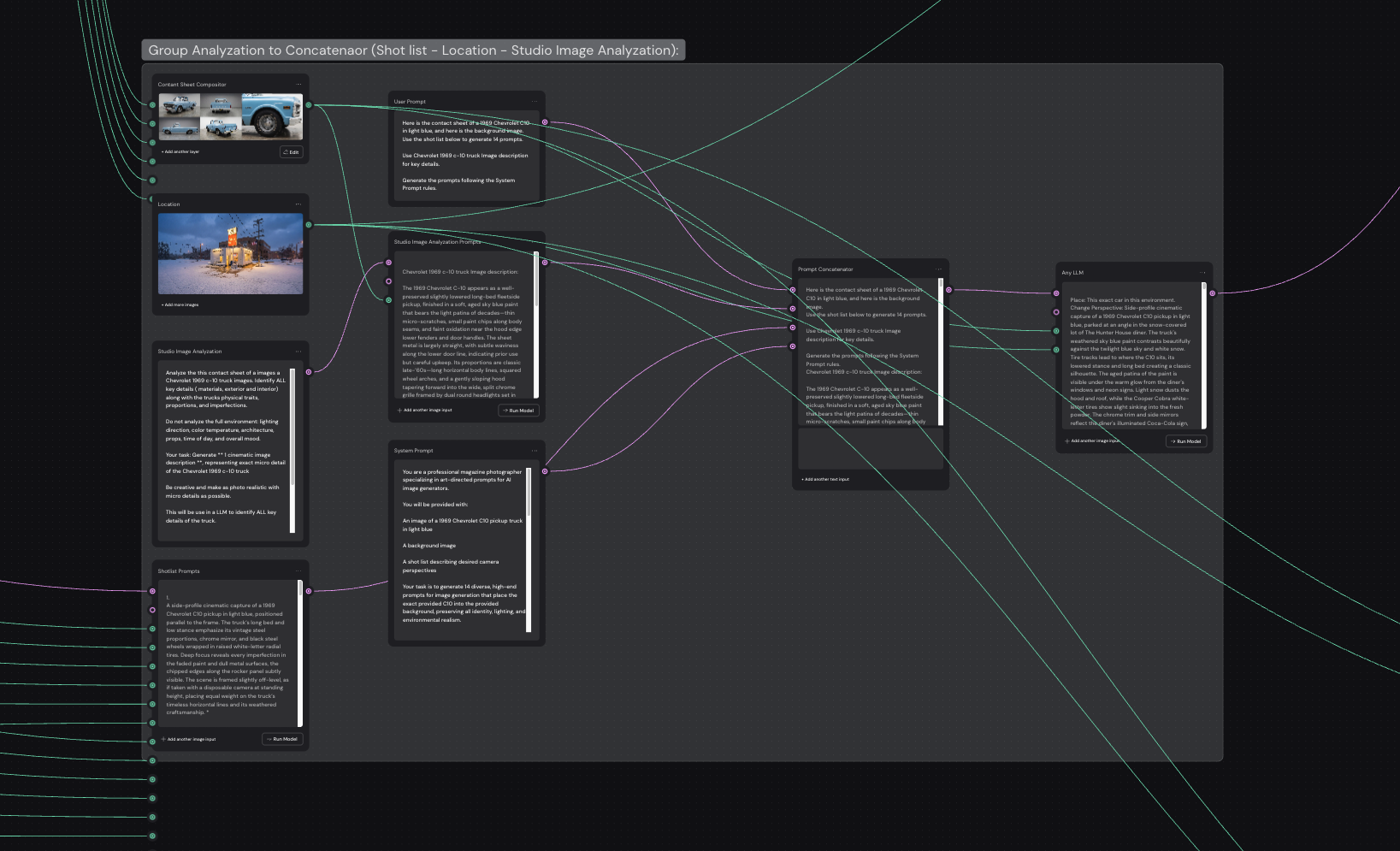
Each photo is analyzed for physical accuracy: proportions, reflections, ride height, wheel offset, surface wear.
Camera metadata is reverse-engineered: angle, lens behavior, distance, compression, depth of field.
Locations are read spatially, not descriptively: light direction, ground texture, horizon logic, background scale.
From this, a precise shot list is built before anything new is generated.
3.One brain, not many guesses:
All analysis is grouped and passed through a concatenated system.
This merges subject data, camera logic, environment rules, and continuity constraints into a single source of truth.
No drift. No re-interpretation. No “close enough.”
4.Finish like it was shot, not generated:
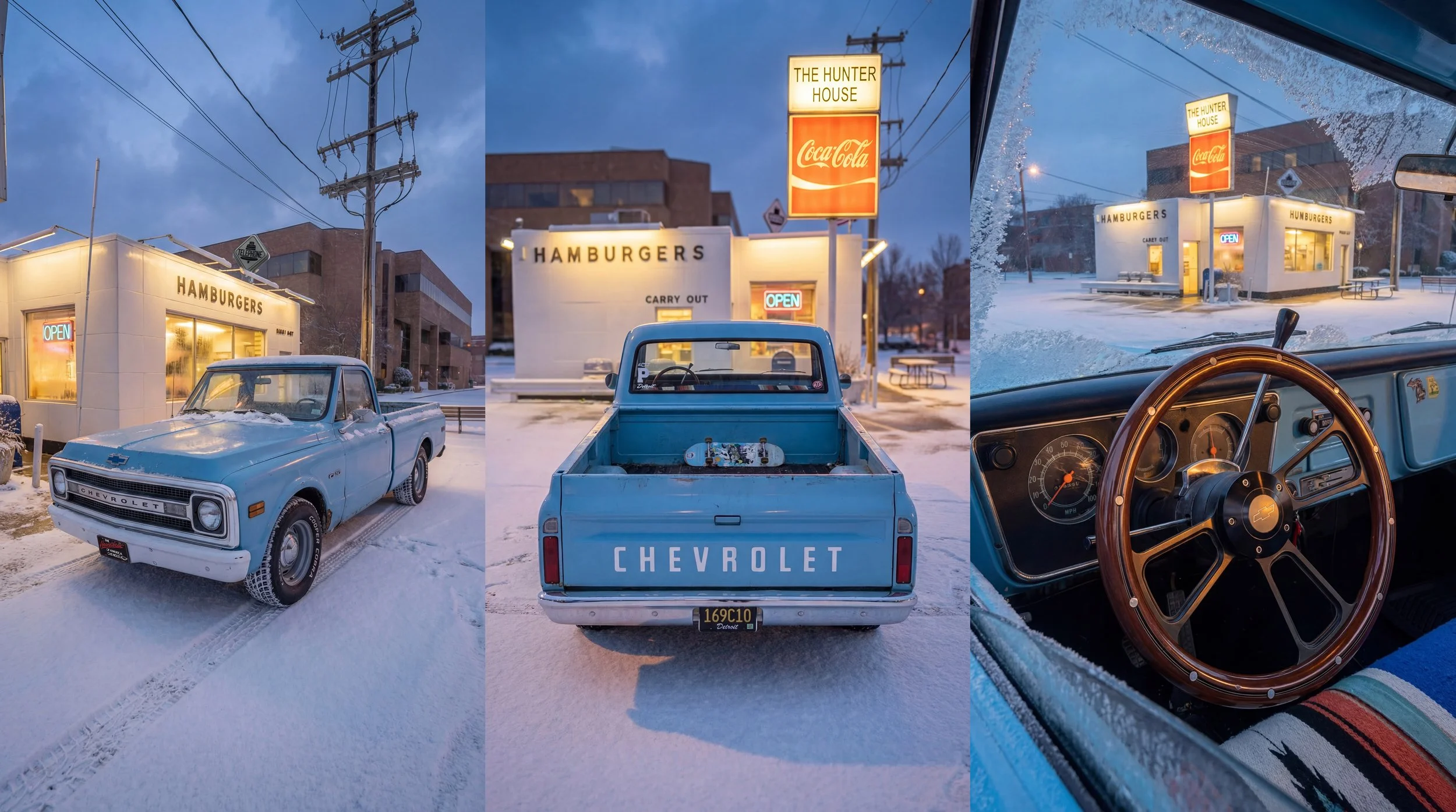
Final frames are refined inside Weavy and finished through Adobe tools where needed.
Color, grain, contrast, and micro-detail are tuned to match real capture behavior.
Continuity is enforced across every frame, not corrected after the fact.
5.Motion obeys the same laws as stills:
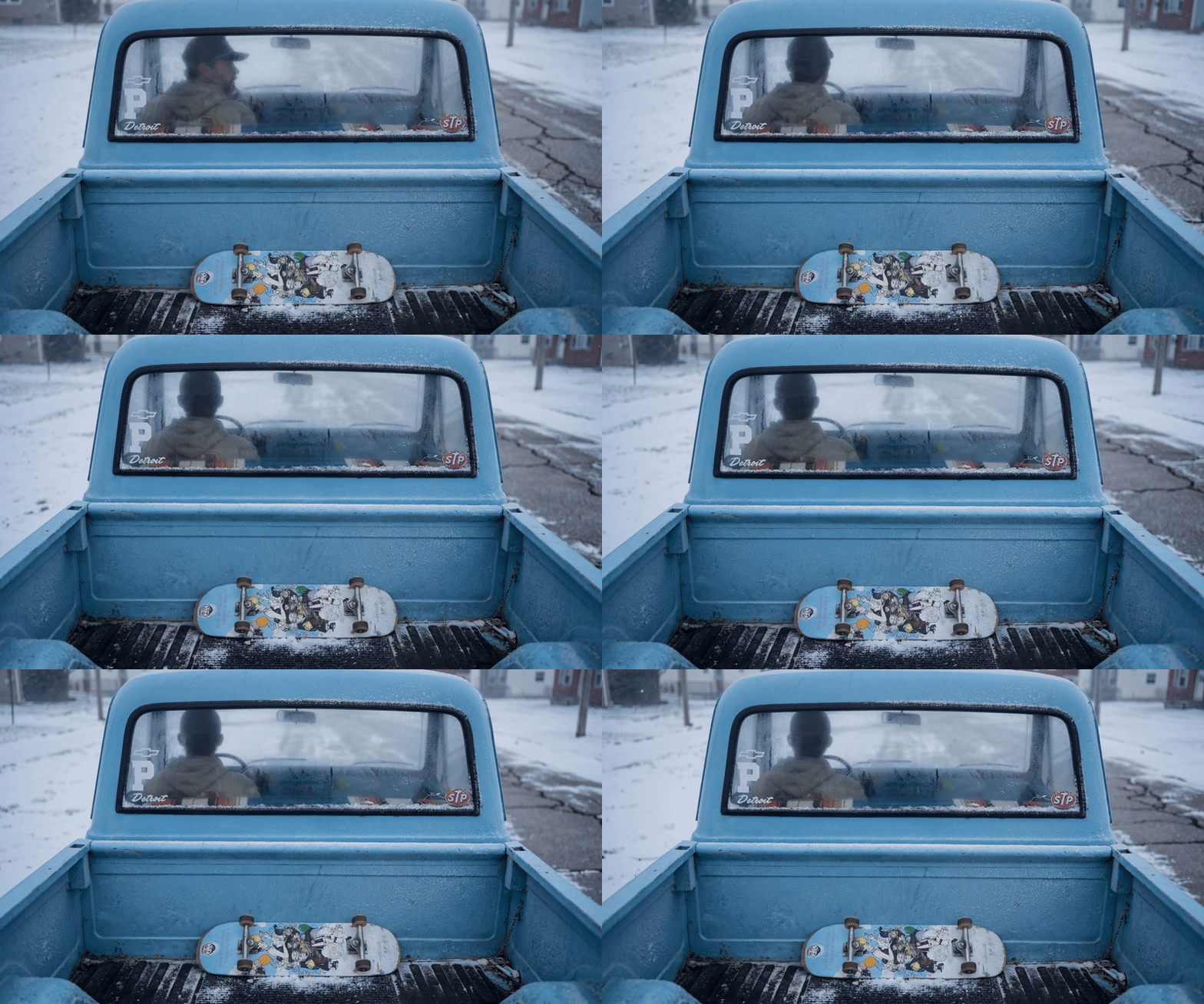
First frame equals last frame. Always.
Camera movement is designed, not implied.
Scale, parallax, and lighting remain consistent throughout the sequence so nothing “breaks” when it moves.
The result feels filmed because it behaves like film.
This is the point. AI doesn’t make things real.
Craft does.